YouTube Golf Is Changing the Game

Ask a golfer under 30 how they got into the game. There's a decent chance the answer isn't a parent, a country club, or a Sunday afternoon broadcast. It's a YouTube video.
That's a bigger shift than it sounds. For most of its history, golf was handed down. You played because someone in your family played, or because you worked somewhere that made it easy. Now people are finding it on their own — through a screen, watching strangers laugh their way around a golf course.
Golf had a gatekeeping problem
Let's be honest about where we started.
Golf came wrapped in a lot of rules that had nothing to do with the rules. Collared shirts. Tee sheets. Unwritten etiquette you were expected to already know. Private clubs you needed to be invited into. None of that is about hitting a ball well, but all of it sends the same message to a newcomer: you should already know how this works.
Televised golf reinforced it. Hushed commentary. Reverent tone. Broadcasts built for people who were already fluent in the sport. It's beautiful coverage, genuinely — but it assumes you already care. It was never designed to make you care.
So golf wasn't hard to play. It was hard to feel welcome in. And for a long time, there was no obvious on-ramp.
The creators who broke the format
The first wave of golf YouTube was mostly instruction and gear. Rick Shiels and Peter Finch built real trust reviewing clubs and breaking down swings — useful, watchable, and a genuine service to golfers who couldn't get a lesson every week. That work mattered. It proved there was an audience.
But the thing that actually changed golf's audience was the second wave: people who stopped teaching and started playing.
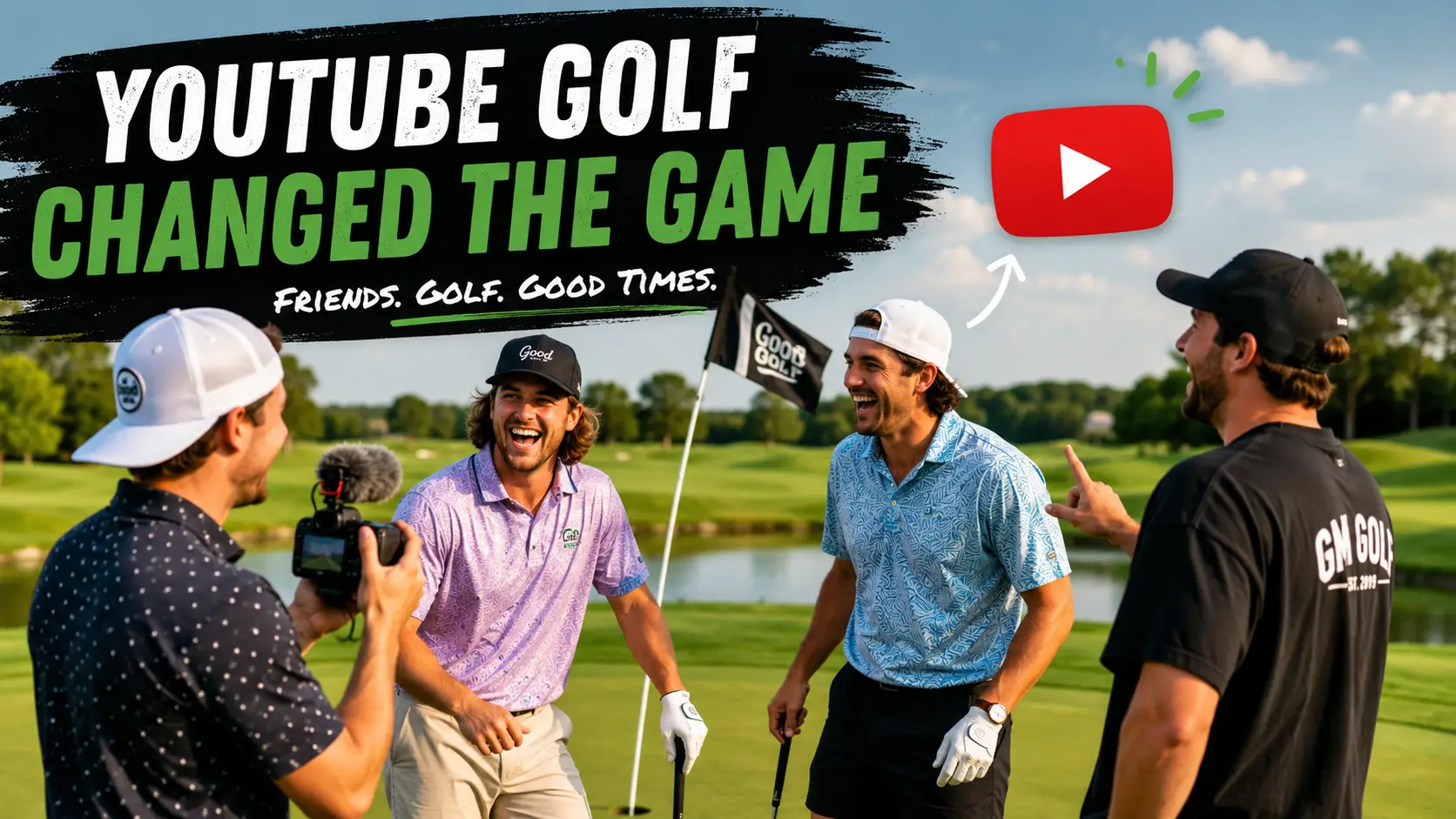
Channels like Good Good, Bob Does Sports, and GM Golf didn't grow by fixing your slice. They grew by putting friends on a golf course with a format, some stakes, and a camera — and then getting out of the way. Grant Horvat and Micah Morris built big followings playing genuinely excellent golf in a way that still feels like a normal round. Bryson DeChambeau turned a major champion's YouTube channel into must-watch content by inviting people to try to break 50 with him.
The formats vary. The underlying insight doesn't: you're not watching golf. You're watching a group of friends play golf. Those are completely different products.
And nobody whispers.
Why it works
- Personality over instruction. You come back for the people, not the tips. Tips you can search for.
- Real stakes, small enough to grasp. A match, a press, a punishment for last place. Nobody needs to explain a FedEx Cup point to you.
- Length is a feature. A 40-minute match lets a round breathe. You see the bad shots, the needling, the recovery.
- Failure stays in. Chunked wedges and three-putts make the highlights better, not worse. Try finding that in a tour highlight package.
What changed for the sport
This stopped being a niche corner of the internet a while ago.
The audience got younger and wider. People who'd never have sat through four hours of tournament coverage will happily watch a creator foursome play a scramble. Golf found viewers it wasn't reaching, without asking them to sit through the on-ramp first.
The pros came to them. Tour players now guest on creator channels regularly, and plenty have launched channels of their own. That would have read as a step down not long ago. Now it's a normal part of a professional's media presence — and often reaches more people than a Tuesday press conference.
The tours noticed. Creator-focused events have made it onto professional stages, which is about as clear a signal as the establishment can send: this audience counts.
It turned into real business. Apparel lines, equipment, live ticketed events, course partnerships, brand deals that look nothing like traditional golf sponsorship. Several of these channels are companies now, not hobbies.
That's a genuine change in who holds influence in golf. It used to sit with the tours, the majors, and the equipment giants. A meaningful share of it now sits with a few dozen people who own cameras.
What it means for the rest of us
Here's the part that matters most, and it has nothing to do with subscriber counts.
YouTube golf gave people permission to play golf their way.
Watch enough of it and you notice the rounds don't look like tournament golf. They look like a Saturday. Guys playing a match, arguing about strokes, pressing a bet on 14, giving each other grief on the tee box. It's competitive without being serious. It's structured without being stiff.
That's not a new way to play golf. That's how buddy golf has always worked — the channels just put it on camera and proved millions of people would rather watch that than a hushed broadcast.
And it quietly dismantled the idea that you need to be good to belong. The most-watched golf content on the internet is full of shanks and laughing. If you've been hesitant to get out there because you didn't think you were good enough, the internet's biggest golf channels have been making the counterargument for years.
We're firmly on that side of things. Buddies on the Green was founded by a lifelong amputee golfer on a pretty simple belief: golf is at its best when it's about friendship and connection, and it should be welcoming to every ability. YouTube golf has been making that case to a much bigger room than we ever could.
If it's nudged you toward wanting a match with your regular group, the formats are easy to steal. Match play, skins, a scramble, a Wolf game — the games that make good videos make good Saturdays, and they work just as well with three of your buddies and no camera.
Where it goes next
A few things look likely.
The line between "creator" and "professional" keeps blurring. More tour players will build audiences directly, and more creators will play in real events. Live and in-person content will keep growing, because that's where the money and the atmosphere are.
The risk is sameness. When a format works, everyone copies it, and the algorithm rewards the copying. The charm of early golf YouTube was that it felt like friends messing around. The channels that keep actually feeling that way will be the ones still worth watching in five years.
But the durable change isn't any single channel. It's the expectation.
A whole generation now arrives at golf assuming it's supposed to be social, funny, a little competitive, and open to them. That's a much healthier front door than the one a lot of us walked through. Whatever happens to any particular channel, that shift is sticking.
Golf got more fun to watch because it finally got honest about being fun to play.
Got a regular group and a format you love? Buddies on the Green keeps the side games and tournaments scored and settled live, so you can spend the round arguing about the important stuff — like whether that putt was really good.
Recommended Products

Titleist AVX Golf Balls 1 Dozen
or the player who is looking for a low flying, low spinning golf ball with very soft feel and excellent greenside control. New high-gradient, high speed core delivers incredible soft feel and longer distance tee-to-green New thin, high-flex casing layer provides lower spin on long game shots

Titleist Pro V1 Golf Balls
Pro V1 has a softer feel, less spin and flatter trajectory than Pro V1x, which makes it the preferred model for players who like exceptionally long distance, the ability to flight shots, and score with precision and touch.

Titleist Hybrid 14 Golf Bag
STAND BAG MEETS CART BAG Hybrid 14 The NEW Hybrid 14 Stand Bag is the perfect crossover between a traditional stand bag and cart bag, delivering cart-friendly, premium comfort and upgraded organization. • Cart Compatible -Push or ride with ease and efficiency • Improved Storage - Built for function • Enhanced Pocket Accessibility - Designed for unparalleled efficiency